Emergency Dentist Support for Holiday and After-Hours Dental Problems

Dental emergencies have a habit of arriving at the worst possible time. It is rarely a calm Tuesday morning when every practice is fully staffed and your regular dentist is easy to reach. More often, the problem starts on a holiday weekend, late at night, during travel, or in the narrow window after a clinic has closed. A cracked molar appears while eating dinner. A child wakes up crying with swelling. A crown comes off when every local office voicemail says the same thing: reopen Monday at 8.
That is when access to an Emergency Dentist stops being a convenience and becomes an essential part of care. The right support can mean the difference between saving a tooth and losing it, controlling an infection before it spreads, or getting through the night without pain that feels impossible to manage. Patients often assume a dental emergency begins and ends with severe toothache, but in practice the range is much broader. Bleeding that will not stop, facial trauma, a knocked-out tooth, a broken filling with exposed dentin, swelling under the jaw, and pain that interferes with swallowing or sleeping all belong in the after-hours conversation.
Holiday and after-hours dental care sits in a difficult space. The problem feels urgent, but not every urgent dental problem belongs in a hospital emergency room. At the same time, not every issue can wait safely for normal business hours. Good emergency support is partly clinical and partly logistical. It involves triage, pain control, infection management, and often a plan to stabilize the tooth or surrounding tissue until full treatment can happen.
What actually counts as a dental emergency
Patients tend to ask the same question first: “Do I really need emergency care, or can this wait?” The answer depends on risk, not just discomfort. Some painful problems are unpleasant but stable. Others can worsen quickly over a matter of hours.
A toothache becomes an after-hours concern when the pain is severe, escalating, or paired with swelling, fever, bad taste from drainage, or tenderness that spreads into the face or neck. Those details matter because a tooth infection is not just a problem of enamel and nerves. Once infection moves into surrounding tissues, it can affect eating, sleeping, hydration, and in uncommon but serious situations, breathing and swallowing.
Trauma is another major category. A knocked-out adult tooth is time-sensitive. Every minute counts, and the first 30 to 60 minutes often shape whether reimplantation has a realistic chance. A cracked or broken tooth can range from a chipped edge that feels rough to a fracture that reaches the pulp, causes bleeding, or leaves the tooth unstable when biting. Dentures, crowns, bridges, and orthodontic appliances can also create emergencies when they impair speech, eating, or soft tissue comfort.
There is also the category of “quietly serious” problems, the ones patients underestimate. Swelling near the gums that seems minor but grows overnight can signal a dental abscess. A tooth that suddenly changes color after a fall may reflect injury to the pulp. A lost filling may not feel dramatic at first, but exposed dentin can become intensely painful once air, cold liquids, or pressure hit it.
One practical rule helps. If the problem involves uncontrolled bleeding, major swelling, trauma to the face or jaw, or pain that cannot be reasonably managed at home, it deserves prompt evaluation. If breathing or swallowing becomes difficult, that moves beyond standard dental urgency and into immediate medical emergency territory.
Why holidays make dental problems harder
Holiday dental care is harder for reasons that go beyond office hours. Staffing is thinner. Pharmacies may have reduced schedules. Regular dentists are harder to reach for records or follow-up coordination. Families are often traveling, which means the treating clinician may be seeing the patient for the first and only time without prior radiographs, treatment history, or medication records.
These situations call for a different kind of judgment. An experienced Emergency Dentist is not just treating the pain of the moment. They are making decisions with incomplete information, balancing short-term stabilization against the patient’s likely access to definitive treatment in the next 24 to 72 hours. That matters more than people realize.
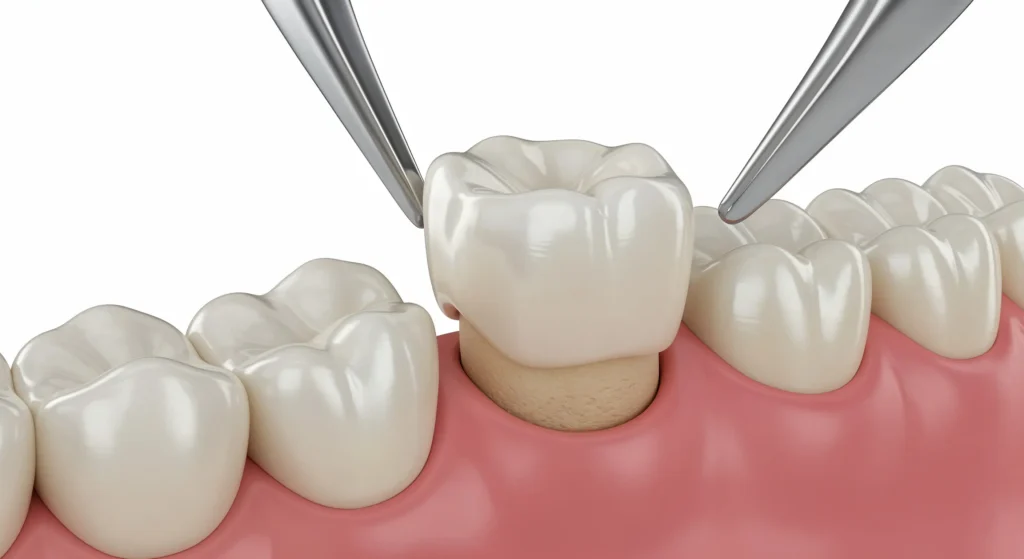
For example, a patient with a large fracture through a back tooth might need the tooth smoothed, medicated, temporarily sealed, and brought out of traumatic bite contact so they can function until their regular dentist can assess whether a crown, root canal, or extraction is the best long-term path. A different patient with facial swelling and a spreading infection may need drainage, antibiotics when clinically indicated, and a much more urgent treatment plan. The symptom may be “tooth pain” in both cases, but the care pathway is very different.
Holiday timing also increases the temptation to delay. People tell themselves they can wait until Monday, finish the family event, or get home from a trip. Sometimes that is fine. Sometimes it turns a manageable problem into a more expensive one. A loose crown is inconvenient on day one. If the underlying tooth is left exposed, shifts under chewing forces, and then fractures, the repair becomes more complex.
The problems that usually need same-day or urgent attention
Some patterns come up again and again in after-hours care. They are worth knowing because they help patients decide faster and act with less uncertainty.
- A knocked-out adult tooth, especially if it happened within the last hour
- Significant swelling of the gums, face, or jaw, particularly with fever or trouble opening the mouth
- Persistent bleeding after an extraction, injury, or oral surgery
- Severe tooth pain that is not responding to basic measures
- A broken tooth with sharp edges, exposed inner tooth structure, or pain when biting
These are not the only emergencies, but they are common ones that rarely improve by waiting overnight. Children need special mention here. A knocked-out baby tooth is handled differently from a knocked-out adult tooth, and reimplanting a baby tooth is generally not the goal. Still, dental trauma in children deserves prompt advice because the gums, supporting bone, and developing permanent teeth can all be involved.
What an Emergency Dentist can do after hours
There is a misconception that emergency dental visits only provide pain medication and a referral. In a well-run urgent dental setting, that is far from the whole picture. The aim is to diagnose the source, relieve immediate symptoms, prevent deterioration, and preserve future treatment options whenever possible.
That may involve taking focused radiographs, assessing bite and mobility, numbing the area, opening and draining an abscess when appropriate, placing a temporary restoration, recementing a crown, smoothing a fractured edge, prescribing medication when clinically justified, or performing an extraction if the tooth cannot be predictably stabilized. In some cases, palliative care really is the right care for the moment. A patient seen at 10 p.m. Before a public holiday may need temporary protection of a fractured tooth and a structured handoff for root canal treatment the next day. That is not incomplete care, it is staged care based on real-world timing and safety.
Good after-hours dentistry also includes knowing when not to over-treat. If visibility is poor because of swelling, if the patient is medically complex, or if the definitive treatment requires specialist equipment and support, a conservative stabilizing approach may be better than rushing into a procedure that creates more risk than benefit.
The first hour at home matters more than most people think
The time between the injury or pain flare and the dental visit can influence outcomes substantially. People often feel helpless in those first minutes, but a few simple actions can protect the situation.
If a tooth is knocked out, handle it by the crown, not the root. If it is dirty, rinse gently with saline or milk if available, or clean water if that is the only option. Do not scrub it. For an adult tooth, placing it back in the socket may be possible if the person is alert and cooperative, but many patients are more comfortable storing it in milk and heading straight to care. If neither is available, saliva can be a temporary transport medium, though milk is generally preferred in everyday first-aid settings.
For bleeding, firm pressure with clean gauze often works better than constant checking. Patients tend to lift the gauze every minute, which restarts the process. A solid 20 to 30 minutes of uninterrupted pressure is often more useful than three separate five-minute attempts. For swelling after trauma, a cold compress on the outside of the face can reduce discomfort. Heat is usually the wrong move in the early stage of facial swelling linked to dental pain.
A lost filling or crown is less dramatic but still uncomfortable. Keeping the area clean, avoiding chewing on that side, and steering clear of very hot, cold, or sugary foods can make a big difference until the tooth is examined. Over-the-counter temporary dental cement from a pharmacy may help in selected situations, but household glues should never go in the mouth. That advice sounds obvious until you work in urgent care long enough to see it happen.
When the problem belongs in the hospital, not just the dental chair
Most dental emergencies are best handled by a dentist, but not all. Patients sometimes go to the emergency room for severe toothache because no clinic is open, and https://paxtoncgaw553.hexaforgey.com/posts/how-an-emergency-dentist-treats-pulp-damage-and-nerve-pain hospitals can help with pain control, infection assessment, and ruling out broader medical danger. Still, a hospital usually cannot perform definitive dental treatment such as root canal therapy, crown repair, or many extractions under standard emergency department flow.
The line changes when the risk is no longer local. Trouble breathing, difficulty swallowing, rapidly spreading swelling, significant facial trauma, suspected jaw fracture, uncontrolled bleeding, or systemic illness with dehydration or high fever deserves immediate medical evaluation. This is especially important for older adults, people who are immunocompromised, patients on blood thinners, and those with diabetes that is poorly controlled. In those cases the dental issue is interacting with the person’s overall health, not sitting in isolation.
One case that stays with many clinicians is the patient who says, “It’s just a tooth,” while holding the side of the neck that started swelling that morning. Sometimes it is just a tooth. Sometimes it is an odontogenic infection moving into spaces where prompt medical support becomes critical. The ability to tell the difference is one reason access to experienced triage matters so much after hours.
Pain control, expectations, and common misunderstandings
Pain is personal, and dental pain can be uniquely exhausting. It affects sleep, concentration, appetite, and mood quickly. Patients often worry that if they are in severe pain, the tooth must come out immediately. That is not always true. A tooth with inflamed pulp can produce extraordinary pain and still be restorable. On the other hand, a less dramatic ache from a long-standing crack may point to a tooth that is structurally unsalvageable. Intensity and prognosis do not always match.
Another common misunderstanding is around antibiotics. Patients frequently expect them for any dental pain, especially after hours when they hope for a fast fix. But antibiotics do not resolve many common causes of dental pain, including irreversible pulpitis. If there is no spreading infection, no swelling, and no systemic involvement, antibiotics may offer little benefit while adding side effects and resistance concerns. The right treatment is often local dental care, not a prescription alone.
That can be frustrating to hear at 11 p.m., but it is honest medicine. An Emergency Dentist should explain what the source of pain appears to be, what can be done now, what cannot be fixed definitively in that setting, and what signs would justify escalation. Patients tolerate uncertainty better when it is clearly framed.
Travel, visitors, and the challenge of being away from your regular dentist
Holiday emergencies often happen when patients are away from home. That changes the visit in practical ways. The treating clinician may not know whether a root canal was previously done on that tooth, whether there was a recent crown prep, whether the patient has a history of difficult extractions, or whether a medication allergy is accurately remembered under stress.
In these situations, details matter. Bringing a medication list, knowing recent dental work, and being able to describe exactly when the problem began can speed care considerably. If you are traveling with children, it also helps to know whether a damaged tooth is baby or permanent, roughly when it erupted, and whether there was bleeding from the gums at the time of injury. Those small facts can shape management more than patients expect.
An experienced after-hours dentist also thinks ahead about continuity. If the person is returning home in two days, the treatment should ideally stabilize the problem and make follow-up straightforward. If the person is staying locally for weeks, a more definitive intervention may make better sense. Dentistry is not only about what can be done, but what sequence of care is sensible in the patient’s real circumstances.
How to prepare before an emergency happens
Most people do not plan for dental emergencies until they are having one, but a little preparation reduces panic later. This matters especially for families with children in sports, adults with large existing restorations, people who travel frequently, and anyone with a history of dental infections or recent major treatment.
- Save the contact details for your regular dentist and one local after-hours provider in your phone
- Keep basic supplies at home, including gauze, a cold pack, ibuprofen or acetaminophen if you can take them safely, and a small container with a lid
- Know your medical conditions, allergies, and current medications
- If you travel, carry dental insurance information and a summary of any ongoing treatment
- Do not ignore small warning signs such as intermittent pain on biting, a loose crown, or a filling that repeatedly catches floss
Those “minor” issues are often the ones that tip into emergencies on long weekends. A molar with a crack line and occasional cold sensitivity may function for months, then split while chewing a crust of bread on Christmas Day. Preventive attention is not glamorous, but it is still the most effective form of emergency management.
Choosing the right after-hours dental help
Not all urgent care options are set up the same way. Some are full-service practices with extended hours. Others are triage-based systems that coordinate among on-call dentists. Some hospital-linked clinics manage oral trauma particularly well. What matters is not just availability, but capability.
When evaluating where to go, patients should look for clear communication, same-day assessment where indicated, and realistic guidance over the phone. A good team asks focused questions: Is there swelling? Fever? Trauma? Bleeding? Can you swallow? Is the tooth loose? How old is the patient? Those questions are not bureaucracy. They are triage.
It is also worth asking whether radiographs are available on site, whether pediatric emergencies are seen, and whether follow-up coordination is offered. Cost transparency matters as well. After-hours care often carries different fees, and patients deserve straightforward information about examination costs, likely temporary procedures, and what might still need to be done later by their regular dentist or a specialist.
What a well-handled emergency visit should leave you with
Even when the problem cannot be solved completely that night, a useful emergency visit should leave the patient in a safer, more manageable position. Pain should be reduced or at least better explained. The immediate risk should be lower. The patient should know what to do next, what to avoid, and which warning signs justify calling back or going directly to hospital care.
The best after-hours dentistry combines calm judgment with practical action. It respects that a person in dental pain at midnight is not just seeking treatment, but relief from uncertainty. They want to know whether the tooth can be saved, whether the swelling is dangerous, whether they can sleep, travel, or wait until morning. Those are reasonable questions, and they deserve experienced answers.
Holiday and after-hours dental problems are stressful because they compress time. Decisions need to be made quickly, often with limited information and plenty of emotion. Access to an Emergency Dentist provides more than a stopgap. It offers triage, treatment, perspective, and the chance to protect long-term oral health when the timing could not be worse. For patients facing sudden pain, trauma, swelling, or a failed restoration outside regular clinic hours, that support is not an extra service. It is a necessary part of modern dental care.
Simple Dental Vermont
Address: 8914 S Vermont Ave, Los Angeles, CA 90044
Phone number: +13239493000
FAQ About Emergency Dentist Los Angeles CA
What can the ER do for a tooth?
The emergency room can provide temporary symptom relief for a bad tooth, such as prescribing pain medicine or antibiotics, but it cannot fix the actual dental problem.
What is the 3-3-3 rule for tooth infection?
The 3-3-3 rule for a toothache or infection typically means taking three 200 mg ibuprofen tablets (600 mg total) three times a day for no more than three days to control pain and swelling while waiting to see a dentist.
What do you do if you have a dental emergency but no dentist?
If you have a dental emergency and no regular dentist, you should search for an urgent care dental clinic, call local walk-in dental offices, or go to a hospital emergency room if you have severe bleeding, swelling, or trouble breathing.