Why Delaying an Emergency Dentist Visit Can Make Things Worse


A lot of people hesitate before calling an emergency dentist. Sometimes it is denial. Sometimes it is cost. Sometimes it is the hope that a throbbing tooth will settle down after a painkiller, a rinse of salt water, and a night of sleep. I understand the instinct. Dental problems often start small, and many people have had minor tooth pain come and go. The trouble is that true dental emergencies do not usually improve because they are ignored. They tend to spread, deepen, crack further, swell more, and become more expensive to fix.
What makes this tricky is that the mouth can hide serious problems for a while. A person may still be able to eat on one side, still go to work, still talk normally, and still tell themselves it can wait until next week. Meanwhile, an infection can be moving from the tooth into the surrounding gum and bone. A fractured tooth can be splitting under chewing pressure. A dislodged crown can leave a tooth vulnerable to decay and nerve irritation. By the time the situation becomes impossible to ignore, the treatment is often more involved than it would have been just a day or two earlier.
The difference between a manageable dental emergency and a complicated one often comes down to timing.
A dental emergency rarely stays the same
One of the most common misconceptions patients have is that if the pain is not unbearable, the problem must not be urgent. That is not how many dental emergencies behave. Pain can fluctuate. Pressure can build and release. Infections can drain temporarily and create the illusion that things are improving. A cracked tooth may only hurt when biting on something hard, until one more meal turns a hairline fracture into a full split.
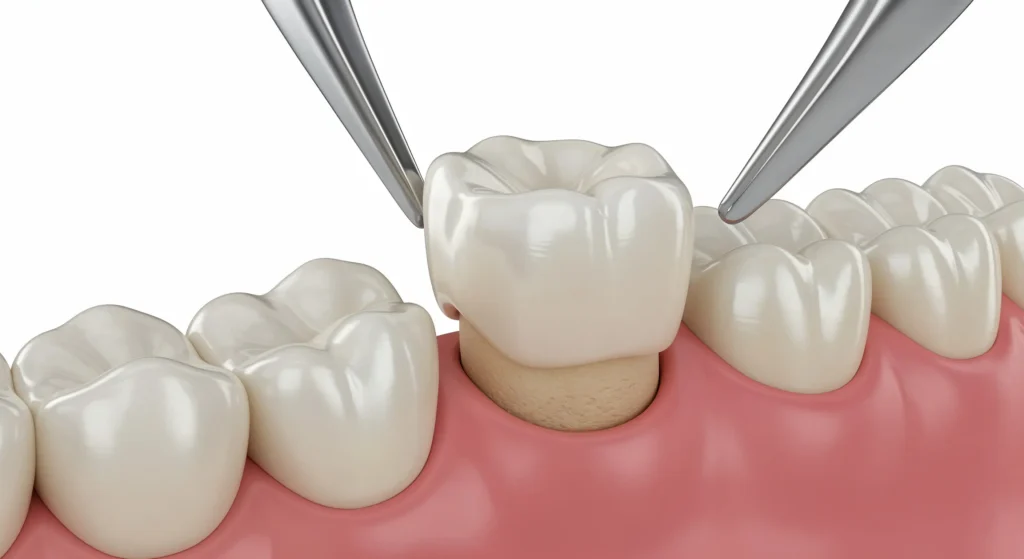
Dentistry is full of situations where early intervention preserves options. A tooth with a deep cavity may still be saved with root canal treatment and a crown if it is treated promptly. Wait too long, and the same tooth may become unrestorable because decay extends below the gum line or the surrounding bone becomes compromised. A knocked out tooth has the best chance of being replanted if addressed within about 30 to 60 minutes. Hours matter. Sometimes minutes matter.
Patients often tell a similar story. The problem started on a Friday. They hoped to get through the weekend. Then the swelling started Saturday night. By Sunday morning they were in severe pain, calling every emergency dentist in the area, and facing a situation that had gone from straightforward to urgent.
Pain is only one part of the picture
Dental pain gets attention because it is disruptive and hard to ignore. But the severity of pain does not always match the severity of the underlying condition. Some dangerous infections begin with dull discomfort. Some cracked teeth are more irritating than painful until they suddenly break. Some abscesses create pressure that feels tolerable right up until facial swelling becomes obvious.
What matters more is the cause. If bacteria have reached the nerve inside a tooth, the body cannot reverse that process on its own. If trauma has loosened or avulsed a tooth, time-sensitive care can determine whether the tooth survives. If swelling is present, that swelling may signal infection spreading into spaces where it can affect the jaw, the cheek, or more serious areas around the airway.
An emergency dentist is trained to sort out which symptoms are inconvenient, which are urgent, and which require immediate escalation. That judgment matters because dental emergencies do not all look dramatic at first glance.
Infections do not stay politely contained
Of all the reasons not to delay, infection is probably the most important. A dental infection starts in a small area, often inside the pulp of the tooth or deep in the gum around it. Once bacteria gain access to deeper tissues, the body responds with inflammation, pressure, and pus formation. That is the stage where people notice throbbing pain, sensitivity to pressure, or a bad taste in the mouth.
If untreated, the infection can move beyond the tooth. It can spread into the gum, the jawbone, and the soft tissues of the face. The result may be visible swelling, difficulty chewing, trouble opening the mouth, fever, or enlarged lymph nodes. In more serious cases, patients can develop trouble swallowing or breathing. At that point, the issue is no longer just dental. It can become a medical emergency.
This is why antibiotics alone are not a complete answer for most tooth infections. Antibiotics may help control bacterial spread for a time, but if the source of the infection remains inside the tooth or around the root, the problem often returns. The underlying cause still needs treatment, whether that means drainage, root canal therapy, extraction, or another procedure. Delaying that care tends to give the infection more opportunity to progress.
I have seen patients who waited because the pain briefly subsided after a course of antibiotics from an urgent care clinic. They assumed the issue was resolved. A few weeks later they returned with renewed swelling and a tooth that now had far fewer treatment options. Temporary relief is not the same as definitive treatment.
Cracks, chips, and breaks can worsen with each bite
A damaged tooth is another problem people often underestimate. If a front tooth chips and it does not hurt much, many assume it is mostly cosmetic. Sometimes that is true. But sometimes what looks minor from the outside involves a deeper fracture line. Back teeth are even more deceptive. A cracked molar may seem fine until the patient bites on crusty bread, nuts, or ice and the weakened cusps separate further.
Teeth do not heal the way skin or bone can heal. Once enamel and dentin are fractured, they remain vulnerable. Biting forces are substantial, especially in the molar region. Every meal can drive a crack deeper. That can mean the difference between a simple bonded repair and a crown, or between a crown and an extraction.
A crown that falls off or a filling that comes loose deserves prompt attention for the same reason. The exposed tooth structure is weaker than the restored version was. It can become painfully sensitive, fracture more easily, and accumulate decay quickly if left unprotected. Waiting because it is “not hurting too much yet” is often how a minor repair becomes a larger reconstruction.
Lost teeth are a race against time
Few situations are more time-sensitive than a knocked out permanent tooth. This is one of the clearest examples of how delay changes the outcome. When a permanent tooth is fully avulsed, the cells on the root surface begin to die once the tooth is out of the mouth and dry. Those cells are critical for successful reimplantation.
A patient who gets to an emergency dentist quickly, or to an emergency department that can coordinate urgent dental care, may have a real chance of saving the tooth. A patient who waits several hours because the bleeding stopped and the pain seemed manageable usually has a much poorer prognosis.
The handling of the tooth matters too. A permanent tooth should be picked up by the crown, not the root, and ideally kept moist in milk or a tooth preservation solution if available. Even then, speed matters. Delayed care can mean the difference between reimplantation and a future implant, bridge, or partial denture.
Baby teeth are different, and they are generally not replanted, which is one reason expert assessment is important rather than guessing at home.
Swelling can change a routine day into an urgent one
Facial swelling has a way of making the seriousness of a dental problem obvious. By then, though, the problem has often already advanced. Gum swelling near one tooth may mean a localized abscess. Swelling in the cheek or jaw can indicate a broader infection. If the swelling is spreading, accompanied by fever, or causing trouble swallowing or breathing, it requires immediate attention.
The reason swelling matters so much is that the mouth is connected to complex spaces in the head and neck. Infections do not always stay in one pocket. They can track through tissue planes in ways that become dangerous surprisingly fast. A person may go to bed with moderate tooth pain and wake up with visible swelling and significant pressure.
People sometimes try to “wait for the swelling to go down” before making an appointment. That gets the sequence backward. Swelling is the reason to seek care now, not later.
Delay often means more treatment, not just more pain
One of the clearest patterns in emergency dentistry is that postponement narrows treatment choices. Early problems are usually easier to control and more conservative to fix. Late problems are often more destructive.
A cavity caught before the nerve is involved may need a filling. The same cavity, left long enough, may require a root canal and crown. A tooth with a manageable crack may be protected by a crown if treated quickly. That same tooth may split beyond repair if the patient continues chewing on it for weeks. Gingival infection around a wisdom tooth might be managed with local treatment and follow-up, but if swelling and repeated flare-ups develop, the situation becomes more complicated.
Cost usually follows the same pattern. People sometimes delay because they are worried about the price of an urgent dental visit. That concern is real, and no responsible clinician should dismiss it. But a delayed emergency often costs more overall. A straightforward extraction can become a surgical one. A restorable tooth can become a missing tooth that later needs replacement. Time lost from work can compound the financial strain.
There is also the emotional cost. Persistent dental pain wears people down. It affects sleep, concentration, patience, and appetite. Parents trying to care for children, professionals trying to get through meetings, and older adults managing other health conditions all feel that burden acutely. The longer the delay, the more life contracts around the problem.
Medical conditions can raise the stakes
Not every patient faces the same level of risk from waiting. Certain medical factors make prompt dental care even more important. Diabetes can complicate https://www.google.com/maps?cid=13657646669204741892 healing and infection control. Immunosuppressive medications can reduce the body’s ability to contain an infection. Patients undergoing cancer treatment, those with recent major surgery, and those with certain cardiac histories may need more coordinated care when dental infections arise.
Pregnancy is another situation where people sometimes postpone treatment out of caution, when the smarter approach is proper, timely evaluation. Untreated infection and severe pain are not harmless alternatives. Emergency dental care can often be provided safely during pregnancy, with appropriate precautions and communication.
Children and older adults also deserve special attention. A child may not describe symptoms clearly, and a dental injury can involve both immediate pain and long-term effects on developing teeth. An older adult with dry mouth, brittle restorations, or reduced dexterity may move from mild irritation to significant breakdown quickly. Assuming it can wait is rarely the safest call in these groups.
What people often mistake for “not an emergency”
Part of the delay problem comes from uncertainty. Many people are not sure what qualifies as urgent. Not every issue needs a late-night appointment, but several common symptoms should not be shrugged off.
Here are situations where calling an emergency dentist is usually the right move:
- Severe toothache that lasts, pulses, or disrupts sleep
- Swelling of the gums, face, or jaw
- A knocked out, loose, or displaced permanent tooth
- A broken tooth with pain, bleeding, or sharp exposed edges
- Signs of infection such as pus, bad taste, fever, or increasing tenderness
Notice that not all of these involve dramatic trauma. Some are common office calls that people nearly talked themselves out of making.
Home remedies have limits
There is nothing wrong with taking sensible first-aid measures while arranging care. Rinsing gently with warm salt water can soothe irritated tissue. Over-the-counter pain relievers may reduce discomfort. A cold compress on the outside of the face can help with swelling from trauma. Orthodontic wax may cover a sharp broken edge temporarily. But these are stopgaps, not treatment.
Clove oil, temporary filling kits, online advice, and social media hacks have created a false sense of control for some patients. I have met people who spent days alternating between home remedies while an abscess grew larger. Others tried to glue a crown back with household products, which complicated the dentist’s ability to recement or replace it properly. The internet is full of confidence and short on judgment.
A useful rule is simple. If the home measure only reduces symptoms but does not address the cause, the clock is still running.
The first 24 hours matter more than people think
There is a practical window in many emergencies where good care changes the trajectory. During the first day, a clinician may be able to stabilize the situation before it cascades. That could mean relieving pressure from an infected tooth, splinting a traumatized tooth, protecting a fracture, controlling bleeding, or starting treatment before swelling intensifies.
Even when definitive treatment cannot be completed immediately, early assessment is valuable. An emergency dentist can determine whether the issue can be monitored briefly, needs urgent intervention, or should be referred for same-day specialist or hospital care. That kind of triage prevents dangerous underreaction and unnecessary overreaction.
Patients sometimes worry that going in early will feel foolish if the problem turns out to be minor. In practice, clinicians would much rather see a manageable problem early than a serious one late.
What to do while you are arranging urgent care
If you suspect a dental emergency, take a few measured steps while contacting a dentist. These actions can protect the area without replacing professional treatment:
- Call an emergency dentist promptly and describe the symptoms clearly, especially swelling, trauma, fever, or difficulty swallowing
- Keep any broken fragment, crown, or knocked out tooth, handling a tooth by the crown rather than the root
- Use cold compresses for facial swelling from injury, and avoid placing aspirin directly on the gum
- Stick to soft foods, avoid chewing on the affected side, and do not test the tooth repeatedly
- Go to urgent medical care immediately if breathing, swallowing, or rapid swelling becomes a concern
That final point matters. Severe spreading infection crosses the line into a medical emergency.
Why hesitation is understandable, but risky
It is worth acknowledging why people delay. Fear of dental treatment is common. So is worry about cost, scheduling, childcare, transportation, and missed work. Some patients have had past experiences where pain faded and nothing terrible happened. Others have been told by friends to “give it a day.” That advice feels reasonable until it is not.
A good emergency dentist understands those pressures. The goal is not to dramatize every ache. It is to identify when delay is likely to raise the stakes. Most patients are not trying to be careless. They are trying to avoid a hassle, protect their budget, or get through a busy week. The problem is that teeth and infections are not interested in anyone’s calendar.
What I have seen, over and over, is that people rarely regret being seen too soon for a genuine concern. They do regret waiting through a weekend, a holiday, or a work trip when the problem predictably worsens.
The bigger picture is preservation
At its core, prompt emergency dental care is about preserving what can still be saved. That might mean saving a tooth, preserving bone, limiting infection, reducing treatment cost, or simply preventing a miserable escalation of pain. Dentistry is often at its best when it intervenes before destruction becomes extensive.
A delayed visit can turn a repair into a root canal, a root canal into an extraction, or a localized problem into one that affects the face and systemic health. That is not alarmism. It is the ordinary progression of untreated dental disease and trauma.
If something feels off, especially pain with swelling, trauma, bleeding, or a damaged tooth, trust the fact that timing matters. An emergency dentist can tell you whether the situation needs immediate treatment, same-day evaluation, or short-term monitoring. What usually makes things worse is not the visit itself. It is the delay before it.
Simple Dental South Gate
Address: 8617 California Ave, South Gate, CA 90280
Phone number: +13236896118
FAQ About Emergency Dentist Southgate CA
What can the ER do for a tooth?
The emergency room can provide temporary symptom relief for a bad tooth, such as prescribing pain medicine or antibiotics, but it cannot fix the actual dental problem.
What is the 3-3-3 rule for tooth infection?
The 3-3-3 rule for a toothache or infection typically means taking three 200 mg ibuprofen tablets (600 mg total) three times a day for no more than three days to control pain and swelling while waiting to see a dentist.
What do you do if you have a dental emergency but no dentist?
If you have a dental emergency and no regular dentist, you should search for an urgent care dental clinic, call local walk-in dental offices, or go to a hospital emergency room if you have severe bleeding, swelling, or trouble breathing.